The conversation between Spencer Pratt and Joe Rogan on The Joe Rogan Experience was framed as a critique of Los Angeles. In reality, it reads more like a case study—one that residents of British Columbia would be unwise to ignore. At its core, the argument is simple: when public money, political incentives, and accountability drift …
The conversation between Spencer Pratt and Joe Rogan on The Joe Rogan Experience was framed as a critique of Los Angeles. In reality, it reads more like a case study—one that residents of British Columbia would be unwise to ignore. At its core, the argument is simple: when public money, political incentives, and accountability drift out of alignment, cities don’t just stagnate—they degrade.
The Pattern: Money In, Outcomes Unclear
Pratt’s most forceful claim is that billions spent on homelessness and public programs in Los Angeles have failed to produce visible improvements. He describes a system where funds are routed through layers of NGOs and administrative bodies, with little clarity on results.
“There’s a whole bureaucracy… where people get paid… and nothing improves,” he argues.
Strip away the rhetoric, and what remains is a familiar concern: where does the money actually go?
In British Columbia—particularly in Vancouver—the same question is increasingly being asked. Spending on housing, harm reduction, and social services has grown substantially, yet street-level conditions remain largely unchanged in key areas.
That disconnect fuels a perception—not always proven, but widely felt—of institutional inefficiency at best, and croneyism at worst.
The Incentive Problem
What Pratt labels corruption, more cautiously described, is often a misalignment of incentives.
If funding increases when a problem grows, organizations are paid to manage—not solve—issues, and oversight is fragmented, then the system can begin to sustain itself regardless of outcomes. This is where accusations of cartel-like behaviour emerge. Not necessarily coordinated criminality—but a network of aligned interests, resistant to disruption.
In BC, similar dynamics appear in repeated budget increases without measurable improvement, overlapping agencies with unclear accountability, as well as procurement and development processes that favour insiders.
It doesn’t require overt corruption. It only requires a system that rewards continuity over results.
Housing, Homelessness, and the Narrative Gap
A central tension in the interview—and one that resonates locally—is the framing of the crisis itself. Pratt rejects the idea that homelessness is primarily a housing issue, calling it instead “a drug abuse and mental health problem.” In British Columbia, policymakers tend to emphasize housing supply.
But on the ground, the reality is more complex: rampant addiction, untreated mental illness and repeat system cycling.
This creates a narrative gap – governments justify spending through long-term housing strategies while the residents see it more as a substance addiction problem that needs to be dealt with in a more effective way.
When those two don’t align, trust erodes—and suspicion grows.
Infrastructure and Misallocation
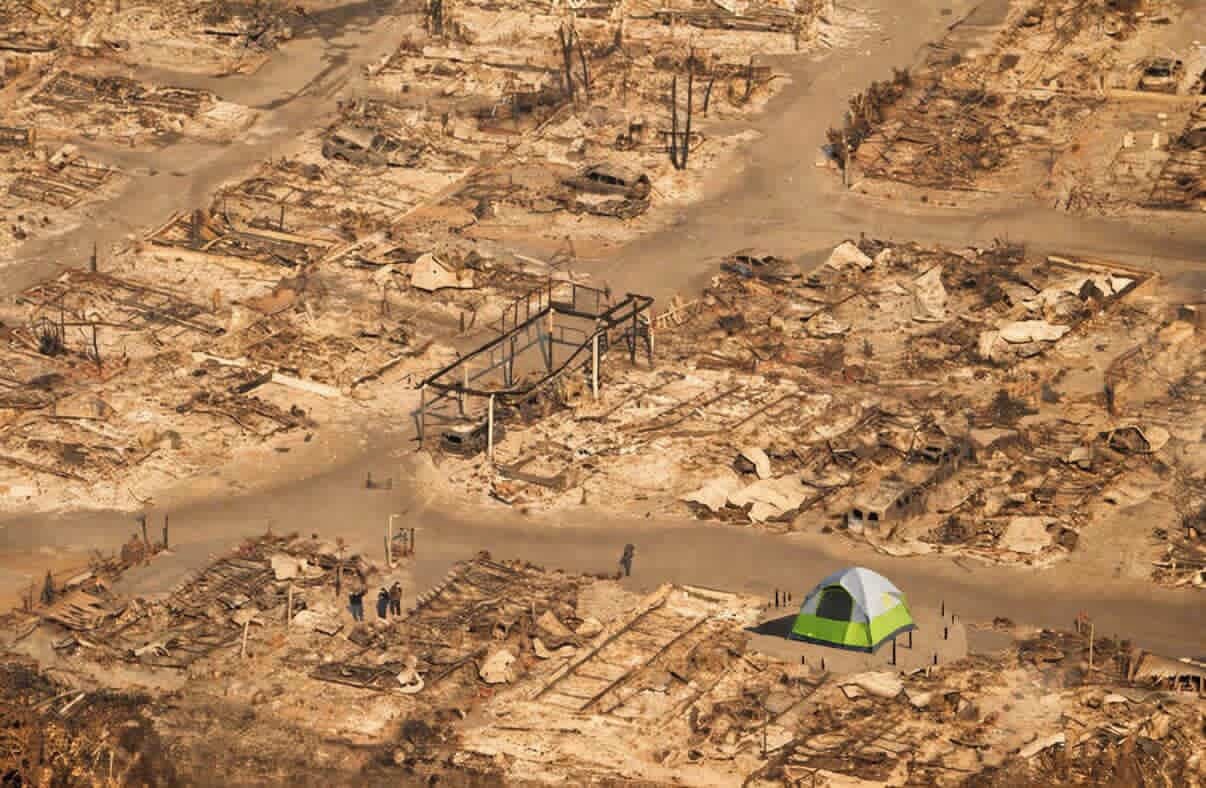
Perhaps the most transferable insight from Los Angeles is not about homelessness—but about resource allocation. Pratt points to what he sees as misaligned priorities: underfunded fire services alongside massive social spending. Whether or not his specifics hold, the broader principle applies directly to BC.
The 2021 British Columbia floods exposed similar vulnerabilities:
- reactive spending vs. proactive infrastructure
- known risks left insufficiently addressed
- delayed execution despite available funding
When critical systems fail during predictable events, the question is no longer capacity—it’s governance.
Municipal Politics: Where It Actually Happens
One of the more grounded observations in the interview is this:
“The people that really affect your life… are your local government.”
This is where the thread of croneyism becomes most relevant.
Municipal politics—whether in Los Angeles or the Lower Mainland—often operate through tight networks of developers, consultants, and agencies, low voter turnout and limited scrutiny, and long-standing relationships that shape decisions behind the scenes.
The result is a system that can feel opaque, even when it’s technically functioning as designed.
For residents in cities like Surrey or Abbotsford, the effects are tangible:
- rising costs
- slower approvals
- inconsistent service delivery
- and growing skepticism about where public priorities truly lie
The Through Line
What ties all of this together is not ideology—it’s accountability.
When spending increases without clear outcomes, problems persist despite sustained investment and decision-making appears insulated from public pressure, people begin to assume the system is working for itself.
That perception—fair or not—is corrosive.
A Local Reckoning
Los Angeles may be further along this trajectory. But the underlying pressures are the same in British Columbia:
- housing scarcity
- visible homelessness
- strained infrastructure
- and rising public expenditure
The warning is not that BC will become Los Angeles. It’s that the same structural conditions, left uncorrected, will produce the same results. the fear is that by the time the decline becomes obvious, the system sustaining it is often too entrenched to change.